You've just finished rigging. The tag end of your tippet knot hangs there — six inches of fluorocarbon that most anglers flick into the water without a second thought. Multiply that by every knot tied on every trip, and you've got a serious problem.
Retrieving and containing leader line isn't complicated. It just takes the right setup and a consistent habit. Here's how to do it.
Why Leader Line Is the Hardest to Manage
Leader and tippet material is thin, light, and nearly invisible — which makes it the easiest line to lose track of and the hardest to find once it's on the ground or in the water. It's also the most frequently cut. Between knot trimmings, fly changes, and tangles, a full day of fly fishing can generate dozens of small pieces.
That adds up to a lot of monofilament if you're not capturing it.
Step 1: Cut With Intention
Use nippers or scissors rather than biting your line. Beyond the dental implications, biting gives you no control over where the tag end goes. With nippers, you control the cut — and you can direct the piece where you want it.
Step 2: Have a Capture Point Ready Before You Cut
This is the key habit. Before you make the cut, know where the piece is going. If you have to search for a pocket after cutting, you'll drop it half the time.
The Leader Eater Mini solves this by putting the capture point right on your body — clipped to your vest, shirt, or waders at chest height. Cut, feed, done. The slot is sized for tippet and leader material specifically, so it captures even the shortest tag ends reliably.
Step 3: Manage Larger Tangles Differently
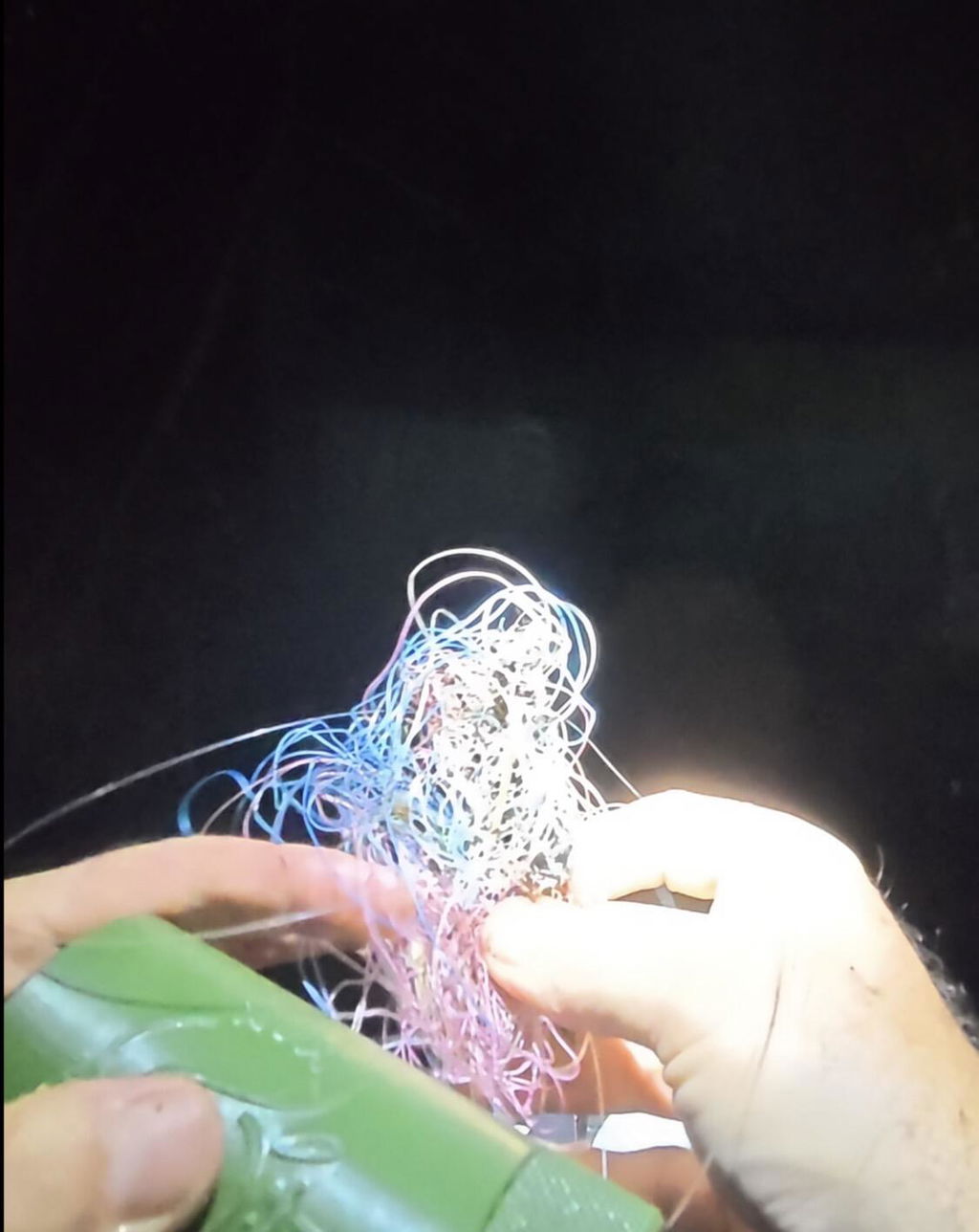
When you pull a bird's nest out of your reel or strip a wind-knotted section of leader, you're dealing with more volume than a single tag end. Coil it tightly before stowing — loose tangles are harder to contain and more likely to escape in wind.
For these larger volumes, the Leader Eater Max is the right tool. It handles full sections of leader and fits in any cup holder on a drift boat, pontoon, or kayak. Keep it within arm's reach and feed tangles in as you strip them off.
Step 4: End-of-Day Check
Before you leave the water, do a quick pat-down of your pockets. Any loose pieces go into the Mini. Empty the Mini and Max into a dedicated trash bag — or straight into a monofilament recycling tube if your access point has one.
The Habit That Sticks
Like any habit, line retrieval becomes automatic when the friction is low enough. The right gear eliminates the friction. After a few trips with the Leader Eater Mini clipped on, you won't think about it — you'll just do it.
Get the Mini and Max together with the Pack Out More Kit and cover every situation on the water.