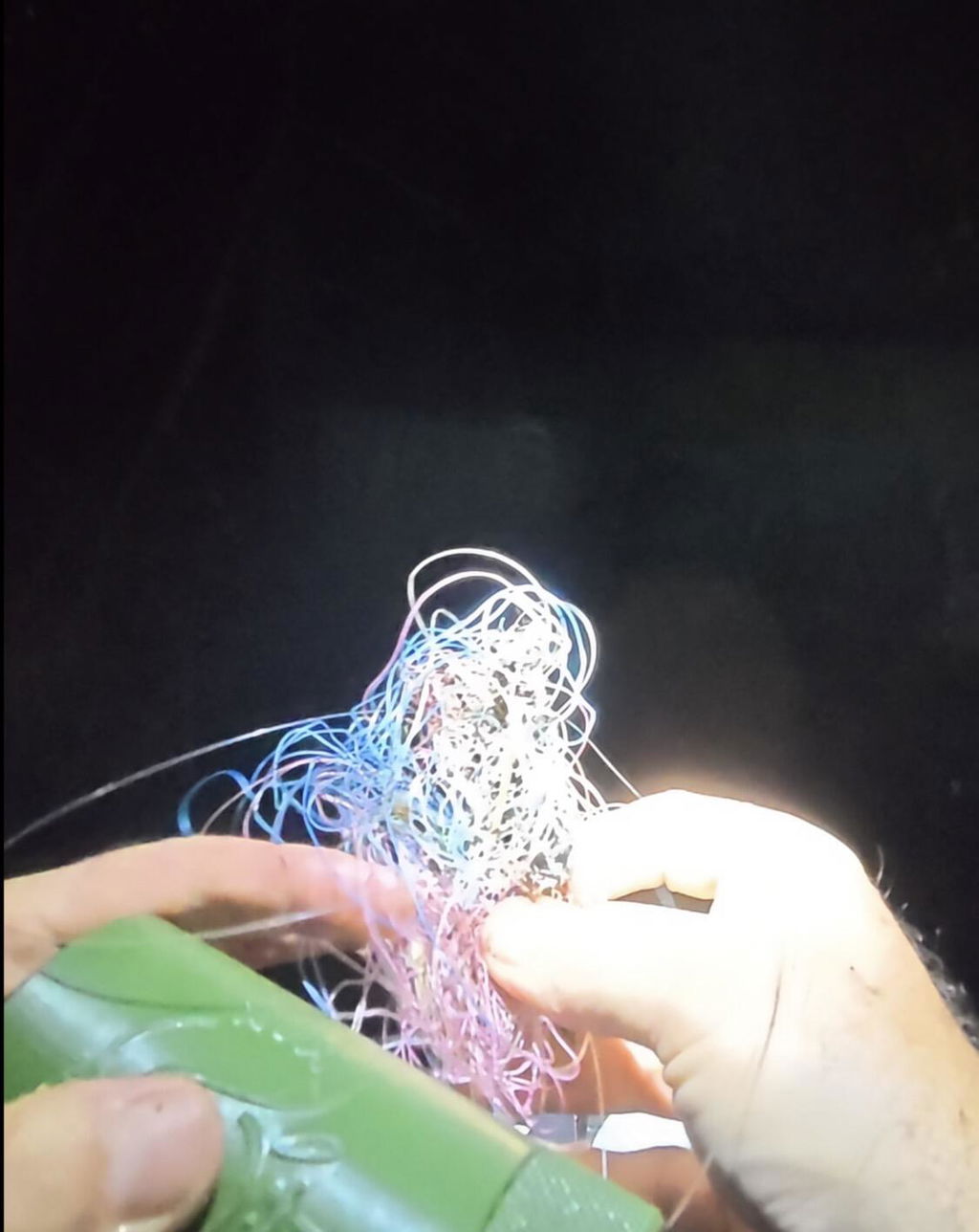
It's easy to overlook a few inches of monofilament on the bank. But that small piece of line carries an outsized environmental cost — one that compounds every season, on every waterway, across millions of fishing trips.
Here's what actually happens when fishing line gets left behind, and what you can do to stop it.
The Problem with Monofilament
Monofilament fishing line is one of the most insidious forms of waterway pollution because it's nearly invisible, nearly indestructible, and nearly everywhere.
- It takes up to 600 years to decompose. A piece of line you drop today will outlast you, your children, and your grandchildren's grandchildren.
- It doesn't break down — it breaks up. UV exposure causes monofilament to fragment into microplastics, which enter the food chain and accumulate in fish tissue.
- It tangles and kills wildlife. Birds, turtles, otters, and fish become entangled in discarded line. The injuries are often fatal — strangulation, lost limbs, starvation from inability to feed.
- It spreads. Line that lands on the bank washes into the water. Line in shallow water migrates downstream. One discarded piece can travel miles.
Who's Most at Risk
Wading birds — herons, egrets, ospreys — are among the most frequently injured. They wade and dive in exactly the zones where anglers fish, and their legs and wings are perfectly sized to get caught in loose coils of line. Waterfowl like ducks and geese ingest line fragments along with aquatic vegetation.
Turtles are particularly vulnerable. They mistake floating line for food, ingest it, and suffer internal blockages that are almost always fatal without intervention.
And it's not just wildlife. Monofilament wrapped around boat propellers and kayak rudders causes real damage and dangerous situations on the water.
Fluorocarbon and Braided Line Aren't Off the Hook
Fluorocarbon is even slower to break down than monofilament — and it sinks, making it harder to see and collect once it's in the water. Braided line is virtually indestructible and poses the same entanglement risks. No line type gets a pass.
The Fix Is Simple
This isn't a hard problem. It just requires the right habit and the right gear.
The Leader Eater Mini is a wearable line collection system designed to make packing out your snipped leader and tippet automatic. It clips to your vest or waders, and every cut piece goes straight in — no fumbling, no dropping, no forgetting. For bigger days, the Leader Eater Max handles larger volumes and fits any cup holder on a drift boat or kayak.
Grab both with the Pack Out More Kit and you're covered for every situation on the water.
Beyond Your Own Line
Once you start paying attention, you'll see line everywhere. Take 60 seconds at the end of each session to scan your immediate area and pack out anything you find — not just your own. It adds up fast. A single cleanup-minded angler fishing 20 days a year can remove hundreds of feet of discarded line from a watershed.
That's real impact. One piece at a time.
Start fishing cleaner. The Leader Eater Mini makes it easy.